

Written by Nick Morales – Keyway Solutions
If you’ve been running CNC machines for a while, you’ve probably heard terms like “Level 2,” “Level 3,” or “setup machinist” thrown around. Maybe you’ve wondered: What’s the actual difference? And how do I move up?
These aren’t just arbitrary titles. Understanding machinist levels matters whether you’re trying to advance your career or you’re a shop owner trying to hire the right talent at the right level.
Quick Reference: The Four CNC Machining Levels
| Level | Title | Key Responsibility |
| 1 | CNC Machine Operator | Run programs written by others, basic operations |
| 2 | CNC Setup / Operator | Independent setups, troubleshoot basic issues |
| 3 | CNC Machinist Programmer | Write programs from blueprints / models, work independently |
| 4 | Senior CNC Machinist Programmer | Optimize processes, mentor, solve complex problems |
The Four Levels: What They Actually Mean
The manufacturing industry generally recognizes four levels of CNC machinists, each with distinct responsibilities and skill requirements. These levels are recognized industry-wide and align with common frameworks used in job postings, training programs, and manufacturing forums.
Machinist 1: CNC Machine Operator
Entry-level. You’re learning the basics and working under supervision.
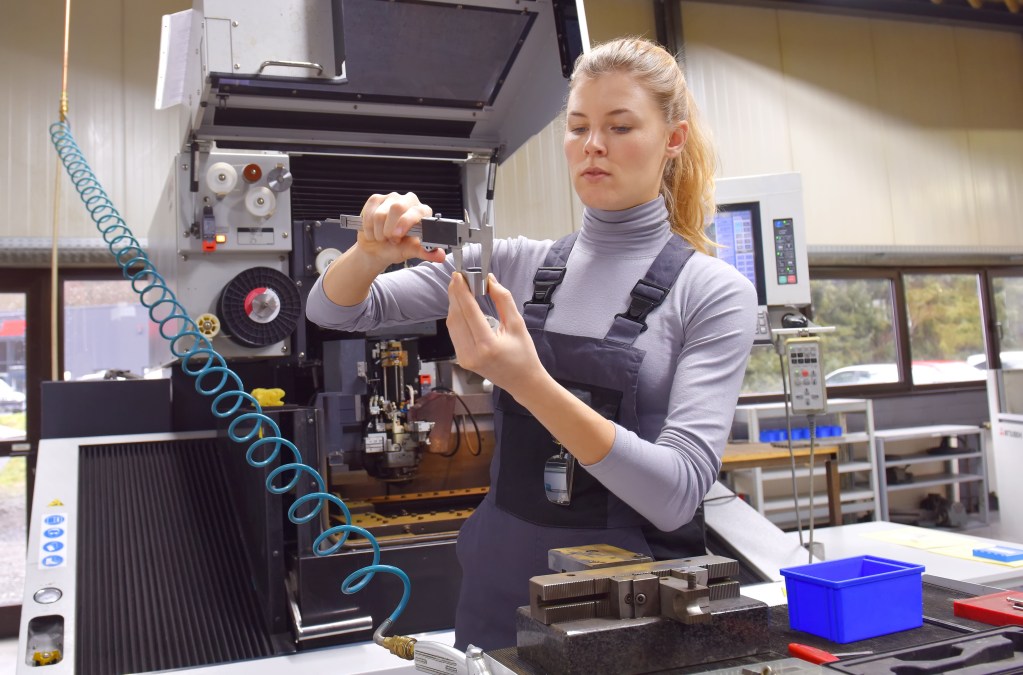
What you’re doing:
- Loading raw materials and blanks into CNC machines
- Running programs that someone else wrote
- Basic deburring and measuring of finished parts
- Adjusting wear offsets to hit dimensions
- Reading basic blueprints
Key point: You’re learning how machines work and building your foundation.
Machinist 2: CNC Machine Setup and Operator
You start working more independently and understand the machine controls.
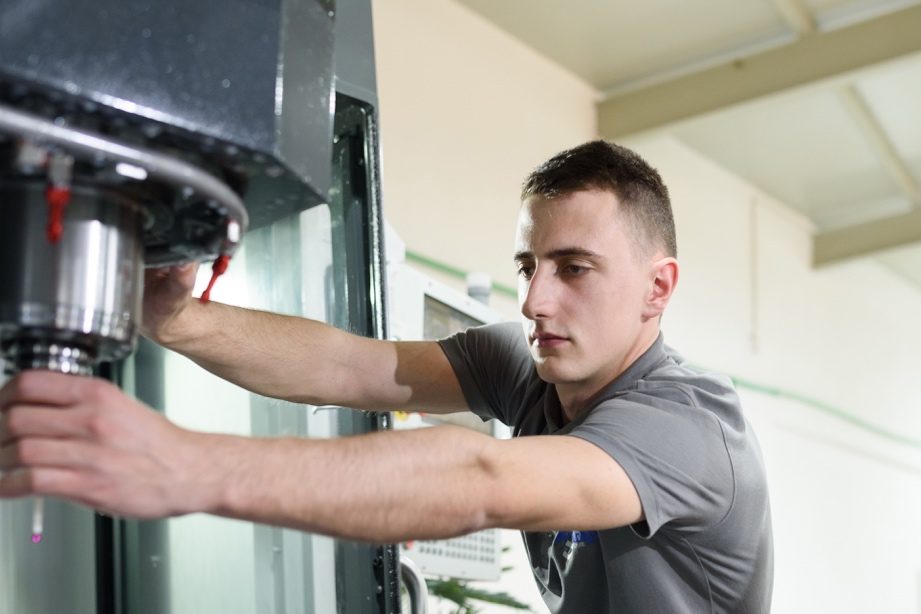
What you’re doing:
- Everything a Machinist 1 does, plus:
- Setting up jobs from setup sheets and verbal instructions
- Monitoring cutter wear and setting tool/work offsets
- Aligning vises and selecting tool holders
- Making judgment calls on safe and productive setups
Key point: You can get a job running without constant supervision. You understand feeds, speeds, and basic troubleshooting.
Machinist 3: CNC Machine Programmer
You’re writing programs, not just running them.

What you’re doing:
- Everything a Machinist 2 does, plus:
- Programming CNC machines from blueprints/models
- Creating tooling and supplies lists
- Working independently on complex setups
- Making decisions about how to approach a job
Key point: You can look at a print and figure out how to make the part from scratch.
Machinist 4: Senior CNC Machinist Programmer
Top tier. You’re the person everyone comes to when something’s wrong.
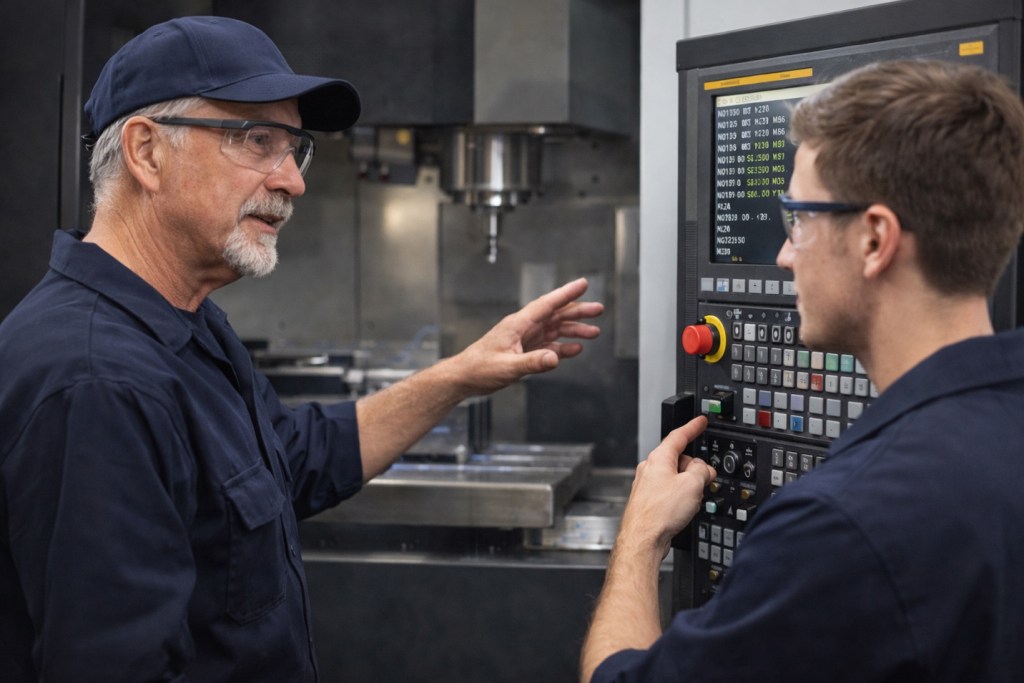
What you’re doing:
- Everything lower levels do, plus:
- Improving production rates and reducing scrap
- Tracking costs and optimizing processes
- Mentoring junior machinists
- Acting as a group lead or senior technical resource
Key point: You’re not just making parts—you’re making the shop better.
How to Progress: Level 2 to Level 3
This is the jump most machinists want to make. Here’s what it takes:
1. Learn G-code and Understand What the Machine is Doing
Most modern shops rely on CAM software (Mastercam, PowerMill, Fusion 360, GibbsCAM) to generate programs from 3D models—it’s faster and handles complex geometry. Understanding G-code remains essential, though how you use it varies by shop. Some still edit at the control; others prefer all changes go back through CAM. Either way, you need to read code, troubleshoot what’s happening, and understand how the machine interprets commands.
When I was making this transition, I was running Fanuc controls and got thrown into the deep end—sink or swim. I started with MDI programming at the control, manually typing blocks of code. It took me a solid year, but it was intense, focused learning. I was dreaming about programming machines.
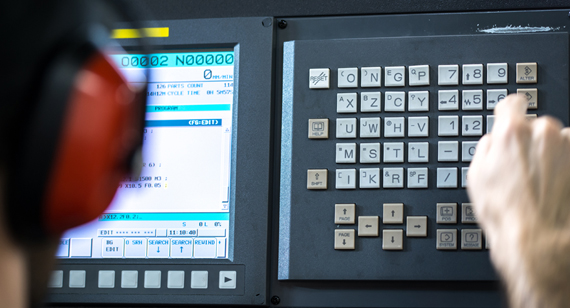
Your path may look different. Many machinists today start with CAM software and learn G-code as they troubleshoot and optimize. What matters is developing both skills—CAM for efficient programming and G-code for understanding what’s actually happening at the machine.
2. Master Blueprint Reading, GD&T and Shop Math
You need to interpret prints fluently—including geometric dimensioning and tolerancing. But it’s more than just reading dimensions. You need solid geometry and trigonometry for real machining problems: calculating tangent points where a cutter radius meets a surface, finding coordinates for angled features, using pins to measure angles or locate from. This isn’t theoretical math—it’s practical problem-solving you’ll use daily.
You also need to understand blueprint views and know the best way to start a project. Sometimes there aren’t mirrored views, or you have to mentally reverse numbers if all dimensions are from the top view but you’re working from the backside.
3. Get Comfortable with CAM Software
Start with simple 2D jobs—I began with engraving programs, just building confidence with the workflow. AutoCAD and 3D modeling skills help too.
Learn to edit and splice programs. Take a roughing program and modify it for finishing and chamfer work. Understand parameters. Keep yourself curious—I wrote macro and variable programs for constant corner radius, compound angles, deep hole drilling. That’s where you really start to understand the logic behind the code.
4. Understand Tooling
Know which tools work for which materials, how to calculate speeds and feeds, and when to use different cutting strategies. Understanding cutting tool applications became the foundation for everything else in my progression.
Timeline: I did it in a year because I had no choice and pushed hard—completely immersed, even dreaming about it. Realistically, expect 1-3 years depending on how much programming responsibility you’re given and how aggressively you pursue learning.
How to Progress: Level 3 to Level 4
This jump is less about technical skills and more about experience, judgment, and leadership.
From My Experience: What Actually Matters
I spent years running CNC mills—everything from Fanuc and Siemens to conversational controls. The jump from Level 3 to Level 4 isn’t just about more programming experience—it’s about a fundamental shift in how you approach the work.
Around 2019, I’d been operating as a Level 3 programmer for years, but I made a conscious decision to push myself further. I started spending evenings researching cutting tool applications, reading technical blogs about speeds and feeds for different materials and cutting conditions, lurking on forums like Practical Machinist trying to solve shop floor problems.
Here’s what made the difference:
Understanding cutting tool applications and machine capabilities—that’s what separates good machinists from great ones. When I encountered issues like chatter, I knew the basics—adjust speeds and feeds, keep the tool as short as possible. But I went deeper. Why was I getting poor surface finish? Why did some tool paths work better? I didn’t just make it work—I researched why it worked.
The shift from Level 3 to Level 4 happens when you start taking full responsibility for optimization. Not just “did I make the part?” but “could I make it faster, cheaper, or better?”
What Level 4 Actually Requires:
1. Focus on efficiency and cost reduction — Don’t just make parts, make them better. Track scrap rates and cycle times. Understand what actually costs the shop money.
2. Develop troubleshooting expertise — Build a mental library of what works across different materials, machines, and conditions. One thing that’s saved me repeatedly: actually reading the machine manual. Those manuals contain functions and features most people don’t know exist.
3. Mentor others — Teaching solidifies your own knowledge and demonstrates leadership. Throughout my career, I’ve always made time to mentor less experienced operators.
4. Think like a manufacturing engineer — Understand the entire process, not just your machine. How does your work affect downstream operations?
5. Stay current with technology — I’ve worked on many different machine brands with different control systems. Here’s something people don’t always understand: different machines have different capabilities. Machine rigidity, spindle characteristics, and design tolerances vary significantly. Understanding those differences and knowing how to adapt your approach—that’s what makes you valuable.
Timeline: Usually 5-10+ years of total experience as a Level 3. For me, it was about 5-6 years at Level 3 before I consciously made that push to take full ownership.
A Note on Specialization and Alternative Paths
Some machinists specialize exclusively in turning (lathes) or milling, while others develop skills across all machines. Senior machinists (Level 4) are often expected to be proficient with multiple machine types.
There’s also the journeyman path—formal apprenticeship programs (typically 4-5 years) that lead to journeyman certification. Organizations like NIMS (National Institute for Metalworking Skills) offer certifications that validate your skills as an alternative or complementary path to the level system described here.
Why These Distinctions Matter
For machinists: Understanding these levels helps you set realistic career goals and know what skills to develop next.
For shop owners and hiring managers: These levels help you write accurate job descriptions, set appropriate pay ranges, and evaluate candidates fairly. A Machinist 2 shouldn’t be expected to do Machinist 4 work at Machinist 2 pay—that’s how you lose good people.
Final Thought
The path from operator to senior machinist requires deliberate learning, hands-on experience, and a willingness to take on new challenges. Understanding these levels helps both machinists and employers have clearer conversations about expectations, responsibilities, and career progression.
If you’re a strong machinist looking for your next opportunity—or a shop owner trying to find experienced talent—Keyway Solutions specializes in connecting skilled CNC machinists with manufacturers in Wisconsin.
Contact us: (414) 497-8770 | info@keywaysolutions.com
Level definitions based on industry-standard frameworks discussed on Practical Machinist and verified through manufacturing job descriptions across the CNC industry.